
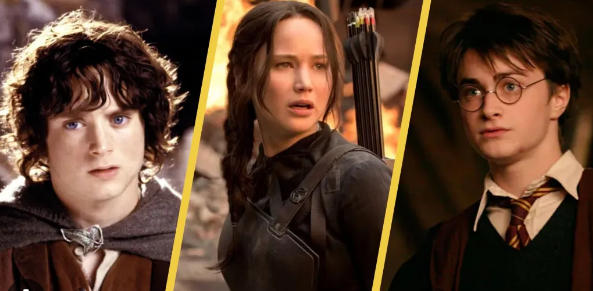
Books have long provided the fertile ground for many successful movie franchises. Adaptations from novels to film bring stories to life in exciting new ways, capturing audiences and creating cultural phenomena. But not all adaptations are equal; some soar while others fall flat. Here’s a look at some notable book series that transformed into successful movie franchises.
1. The Harry Potter Series
Adapted from J.K. Rowling’s beloved series, the Harry Potter films took the world by storm, capturing the hearts of millions. Spanning seven books, the franchise was brought to life with eight spellbinding movies, following young wizard Harry Potter as he navigates the challenges of growing up in the magical world while combating dark forces. The care taken in the adaptation, from casting to set design, contributed significantly to its success.
The films not only attracted devoted fans of the books, but also brought new viewers who may not have read the series. The attention to detail, enrichment of characters, and capturing the essence of the original story helped forge a strong connection between the books and their cinematic counterparts, allowing the franchise to thrive long after its conclusion.
-
- Read the books before watching the films for deeper understanding.
-
- Discuss and analyze character arcs and themes with fellow fans.
-
- Attend literary events or book club meetings to gain insights into the series.
-
- Explore the Wizarding World through related media like video games.
2. The Lord of the Rings Trilogy
J.R.R. Tolkien’s epic fantasy novel “The Lord of the Rings” was masterfully adapted into a film trilogy directed by Peter Jackson. Released between 2001 and 2003, the films garnered critical acclaim and commercial success, illustrating the power of good storytelling paired with groundbreaking visuals. The adaptation skillfully brought the rich lore of Middle-earth to the big screen while retaining essential themes of friendship, courage, and sacrifice.
The cast, including actors like Ian McKellen and Elijah Wood, delivered compelling performances that resonated deeply with audiences. Additionally, the use of cutting-edge CGI and stunning practical effects helped create the breathtaking landscapes and iconic battles that Tolkien’s readers had always imagined. This melding of creativity and innovation set a high standard for future adaptations.
-
- Immerse yourself in Tolkien’s universe by reading “The Silmarillion” for background.
-
- Watch behind-the-scenes documentaries to appreciate the filmmaking process.
-
- Join fan forums to discuss theories and hidden elements in the story.
-
- Consider audiobooks for a different experience of the text.
3. The Hunger Games Saga
Suzanne Collins’ “The Hunger Games” series captivated readers with its dystopian themes and strong female protagonist, Katniss Everdeen. The film adaptation debuted in 2012 and was an immediate success, culminating in a four-movie franchise that explored themes of survival, government control, and resistance. Jennifer Lawrence’s portrayal of Katniss brought authenticity and depth to the character, further endearing her to fans.
The series struck a chord with audiences particularly in the context of societal issues, inviting discussions about power dynamics and inequality. The films not only succeeded commercially, but they also ignited a cultural conversation about activism and personal agency, appealing to viewers of all ages.
-
- Read books that inspired the film for a richer narrative experience.
-
- Engage with social issues presented in the story for greater contextual understanding.
-
- Attend themed events or viewings to immerse yourself in the fan community.
-
- Explore fan fiction that expands on the characters and plot.
4. The Twilight Series
Stephenie Meyer’s “Twilight” series became a worldwide phenomenon, with its mix of romance, fantasy, and suspense. The first film was released in 2008, and the entire series went on to achieve cult status, drawing in dedicated followers who were captivated by the love story between Bella Swan and Edward Cullen. The films’ blend of moody aesthetics and cheesy romance became a defining aspect of the early 2010s cinema.
While critics had mixed reviews, the films resonated profoundly with teenage audiences, sparking a conversation about love, choice, and identity. The franchise also marked a resurgence of popularity for vampire-themed narratives in media, influencing countless follow-up adaptations and interpretations across various platforms.
-
- Watch all films in order to fully grasp the character development.
-
- Join book clubs or fandoms that focus on the series.
-
- Participate in online discussions to share thoughts and interpretations.
-
- Explore fan art and stories to connect with other fans’ creativity.
In conclusion, these book-to-movie adaptations not only demonstrate the potential of storytelling but also showcase the beauty of collaboration between literature and cinema. Whether you’re a die-hard Tolkien fan or a casual viewer of the latest book adaptations, diving into these stories can enhance your appreciation for both mediums. So, pick up a book or queue up a film and enjoy the adventures waiting for you!