
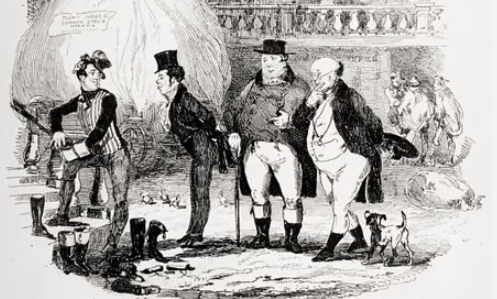
Charles Dickens is renowned for his ability to entwine humor and satire within the intricate narratives of his novels. His unique style offers readers a lens through which to view the societal issues of Victorian England while also providing a comedic respite from the often heavy themes. In this post, we will explore how Dickens uses humor and satire as effective literary devices to highlight the absurdities of his time.
1. The Use of Absurd Characters
One of the most effective ways Dickens employs humor is through the creation of exaggerated characters who embody the quirks and follies of society. For example, Mr. Bumble, the beadle in “Oliver Twist,” exemplifies the absurdity of authoritative figures. His pompous demeanor and self-importance not only serve as a source of humor but also critique the ineffective and often cruel welfare system of the time.
Similarly, in “David Copperfield,” characters like Mr. Murdstone portray harshness and rigidity that contrast sharply with the innocence of David. These characters often find themselves in ludicrous situations, which makes the reader laugh while simultaneously provoking thought about the underlying societal themes. Dickens masterfully blends comedic elements with a biting critique of social norms.
-
- Look for exaggerated traits in characters for comedic effect.
-
- Consider how characters reflect societal norms and values.
-
- Examine the funny situations arising from serious contexts.
-
- Analyze the contrast between absurd characters and realistic ones.
2. Satirical Commentary on Society
Another prominent aspect of Dickens’s humor is his sharp satirical commentary on social issues. In “Hard Times,” for instance, the character of Mr. Gradgrind represents the rigid educational system that values facts over imagination. The absurdity of his philosophy becomes evident as the characters struggle to live under such an oppressive worldview, softly mocking the notion that life can be reduced to mere statistics.
Moreover, Dickens uses humor as a tool to critique the harsh realities of industrialization. In “Bleak House,” the endless litigation experienced by the characters serves as a satirical look at the legal system. The absurdity of the situation invites the reader to laugh, while also reflecting on the inefficacy and the cronyism present in the justice system of the time.
-
- Identify the societal issue being satirized in the novel.
-
- Take note of humorous elements that highlight serious themes.
-
- Examine how humor reinforces or undermines the critique.
-
- Reflect on how absurd scenarios mirror real-life issues.
3. Humor as a Coping Mechanism
Aside from critique, Dickens often uses humor as a coping mechanism for his characters and, indirectly, for his readers as well. In “The Pickwick Papers,” the jovial adventures of Mr. Pickwick and his friends offer a contrast to the grim realities of working-class life. Their light-hearted escapades serve to uplift the spirit, showcasing how humor can provide relief amidst hardship.
Furthermore, in “A Tale of Two Cities,” the dark humor combined with tragic circumstances reflects the resilience of human spirit. Characters find ways to laugh even in the face of impending doom, demonstrating that humor functions as a powerful tool for survival amidst adversity. Dickens illustrates that laughter can be a form of resistance against the pains of life, offering both characters and readers a moment of reprieve.
-
- Recognize moments of humor in dark or dire situations.
-
- Explore how characters use humor to cope with their circumstances.
-
- Reflect on the role of laughter in human resilience.
-
- Find joy in the mundane aspects of life portrayed in the stories.
In conclusion, Dickens masterfully uses humor and satire not only to entertain but to provoke a deeper understanding of the societal issues of his time. His works encourage readers to find the absurdities within reality and reflect on the human experience. Consider diving into one of Dickens’s novels with an eye for humor, as it may enhance your appreciation for his brilliant storytelling and social critique.