
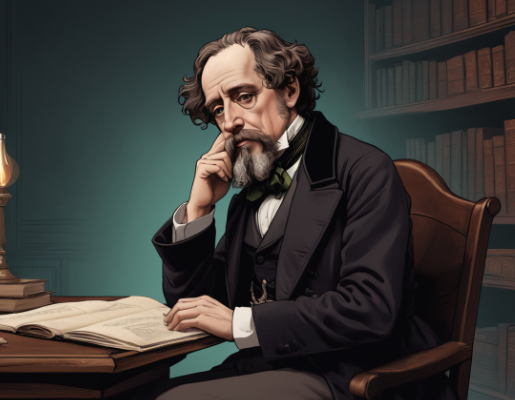
Charles Dickens is an author who artfully weaves together the threads of melodrama and realism, creating a captivating tapestry that illustrates both the emotional intensity of human experiences and the stark realities of Victorian society. His ability to blend these two distinct styles allows readers to engage with his characters on a deeply personal level while also confronting the social issues of his time. In this blog post, we will explore how Dickens masterfully combines melodrama and realism in his works through various examples.
1. The Emotional Depth of Characters
One of the hallmarks of Dickens’s writing is his ability to craft characters that are richly layered and emotionally compelling. For example, in “Oliver Twist,” the protagonist’s hardships evoke powerful emotions due to his innocence contrasted with the world’s cruelty. Dickens enriches this melodrama by grounding it in the realistic struggles of orphans in 19th-century London, highlighting not only the character’s plight but also societal indifference towards children in poverty.
Similarly, characters like Ebenezer Scrooge in “A Christmas Carol” showcase dramatic emotional arcs that reflect personal redemption amidst social commentary. Scrooge’s transformation from a miser to a caring individual illustrates the potential for change within the human spirit, which resonates deeply with readers. By anchoring these intense emotional journeys within the realism of Victorian challenges, Dickens enables the audience to empathize with his characters while remaining aware of the broader societal issues.
-
- Analyze characters’ emotional arcs in your writing.
-
- Use contrasting personalities to evoke stronger emotional responses.
-
- Incorporate societal issues relevant to your character’s journey.
-
- Show character growth through vivid experiences that reflect real-life challenges.
2. Setting and Social Commentary
Dickens’s settings are often vivid and serve as more than just backdrops—they embody the struggles of the characters and the realities of society. In “Bleak House,” for instance, the muddled, stagnant nature of the setting parallels the convoluted legal systems that entrap poor citizens. This blend of melodrama and realism immerses readers in a world where every element is interconnected, reinforcing the sense that the environment directly impacts the characters’ lives.
In “Hard Times,” the industrial landscape surrounds the characters, mirroring their mechanical and emotionally drained existence. Dickens critiques the dehumanizing effects of industrialization while presenting the stark realities that many working-class citizens faced. The effect is heightened by the melodramatic elements of the characters’ struggles, making readers acutely aware of their own social and moral responsibilities.
-
- Choose settings that complement your character’s experiences.
-
- Use descriptive language to evoke mood and tone in your writing.
-
- Integrate social issues subtly through your setting.
-
- Ensure the setting reflects the emotional state of the characters.
3. The Importance of Plot Twists and Conflict
Conflict is a driving force in Dickens’s narratives, often arising from melodramatic situations that force characters into choices reflecting their moral fiber. In “Great Expectations,” the unexpected twists—such as Pip’s mistreatment of Joe and later his realization of true wealth—create dramatic tension that keeps readers engaged. The melodrama here is rooted in human emotions, yet each twist reveals a realistic portrayal of personal growth and societal expectations.
Moreover, plot twists serve as a catalyst for Dickens’s social critique. For instance, the shocking revelations about characters like Estella challenge readers’ preconceptions about wealth and happiness, revealing that appearances can be deceiving. By combining melodramatic elements with such twists, Dickens not only entertains but also prompts readers to reflect on the moral lessons embedded within his stories.
-
- Incorporate unexpected twists to maintain narrative interest.
-
- Create conflicts that reflect emotional and societal challenges.
-
- Ensure that each twist contributes to character development.
-
- Challenge readers’ assumptions through thematic contrasts.
4. A Voice for the Voiceless
Dickens often uses melodrama to give a voice to the marginalized and oppressed, making societal critiques even more palpable through his narratives. In “David Copperfield,” the experiences of children and the lower class are presented with both sensitivity and sardonic humor, allowing readers to connect emotionally with their struggles. This blend encourages empathy and a greater understanding of societal failings.
In “Little Dorrit,” the systemic injustices of the debtor’s prison are explored through the lens of the title character’s plight. The pathos of her situation is both melodramatic and intensely realistic, bringing attention to the impact of economic structures on individuals’ lives. Dickens uses these experiences to urge readers to reflect on their roles within society and to challenge injustice actively.
-
- Highlight marginalized voices in your writing.
-
- Employ melodramatic elements to amplify emotional impact.
-
- Encourage readers to engage with social issues through relatable narratives.
-
- Provide context to the struggles faced by different societal groups.
In conclusion, Charles Dickens’s unique ability to blend melodrama with realism enriches his narratives, making them both emotionally gripping and socially relevant. This seamless combination not only engages readers on a personal level but also compels them to contemplate pressing societal issues. As you embark on your own writing adventures, consider how you might weave these two elements together to create depth and resonance in your stories.