
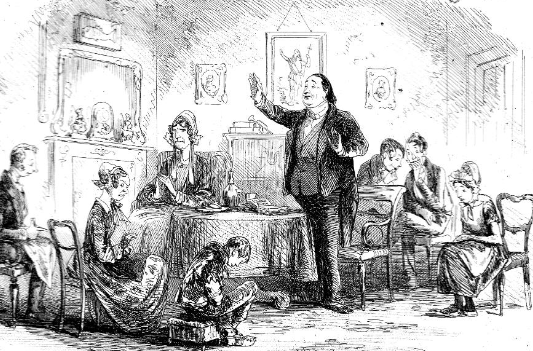
Charles Dickens is renowned for his sharp critique of the societal and institutional structures of his time. His novels often highlight the injustices and moral failings of institutions, such as the legal system, education, and social welfare. Through his engaging storytelling, Dickens invites readers to reflect on the implications of these institutions and their impact on individuals and society.
1. The Legal System in Dickens’s Works
In novels like “Bleak House,” Dickens offers a scathing critique of the English legal system. The case of Jarndyce vs. Jarndyce, which drags on for generations, serves as a poignant illustration of how legal processes can become entangled and dehumanizing. Characters involved often suffer not only from financial burdens but also from a loss of hope, exposing the emotional toll of bureaucratic inefficiencies.
Moreover, Dickens depicts lawyers as self-serving individuals more interested in their own gain than in justice, which reflects his broader disdain for corruption within the judicial system. This frustration resonates with readers, prompting them to question the fairness and efficacy of legal proceedings in their own lives, even today.
-
- Reflect on how legal issues can affect emotional well-being.
-
- Research local legal aid services for potential support.
-
- Consider mediation as an alternative to litigation.
-
- Keep records of all correspondence related to legal matters.
2. Critique of Education Systems
In “Hard Times,” Dickens tackles the industrial education system that prioritizes rote memorization over creativity and critical thinking. The character of Thomas Gradgrind, who embodies the motto “facts alone are wanted in life,” represents a rigid educational philosophy that crushes imagination. Dickens argues that such an approach to teaching stifles individuality and does not prepare students for the complexities of real-world situations.
Add this to the neglect faced by the children in workhouses, and the message becomes even clearer: education must serve a greater purpose than merely equipping students with facts. Dickens advocates for a holistic approach to education that nurtures emotional, artistic, and physical development alongside intellectual growth.
-
- Encourage creativity in your learning or teaching methods.
-
- Promote discussion-based learning rather than memorization.
-
- Engage with local educational initiatives that emphasize holistic learning.
-
- Stay updated on educational reforms that align with these values.
3. Social Welfare and the Poor Laws
Dickens’s portrayal of institutional failures extends to the Poor Laws in works such as “Oliver Twist.” The harsh conditions endured by orphaned and impoverished children reveal the inefficiencies of the social welfare system of the time. Oliver’s plight highlights how the system often prioritizes punishment over assistance, leaving society’s most vulnerable members trapped in cycles of poverty and despair.
Moreover, through characters like Fagin and the Artful Dodger, Dickens exposes the darker side of poverty, illustrating how desperation can drive individuals to crime. This vivid representation challenges readers to consider their own roles in addressing social injustices and advocating for better support systems.
-
- Support local charities focused on helping the impoverished.
-
- Volunteer time at shelters or food banks.
-
- Educate yourself about modern welfare policies and their effects.
-
- Encourage community discussions on social justice and welfare improvements.
4. The Role of Family and Community
Throughout his narratives, Dickens emphasizes the importance of family and community as counterbalances to institutional failures. In “David Copperfield,” for instance, the protagonist finds solace and support from friends and chosen family amid the neglect and ineffectiveness of established institutions. This narrative arc underscores the idea that personal relationships can provide resilience against societal challenges.
Moreover, Dickens advocates for social responsibility, urging individuals to care for one another. The love and solidarity found in close-knit communities serve as a crucial antidote to the loneliness and desolation perpetuated by institutional neglect, suggesting that genuine human connections can lead to healing and empowerment.
-
- Strengthen your own community by getting involved in local activities.
-
- Foster strong relationships with friends and family.
-
- Support local initiatives that focus on community building.
-
- Advocate for policies that promote community welfare and support systems.
In conclusion, Dickens’s criticism of institutions serves not only as a reflection of the societal issues of his time but also as a timeless call to action. As readers engage with his works, they are encouraged to reflect on their own lives and the institutions around them. Consider becoming an advocate for positive change, whether it is addressing social injustices, contributing to educational reforms, or strengthening community ties. Every action counts in creating a more just and equitable society.