
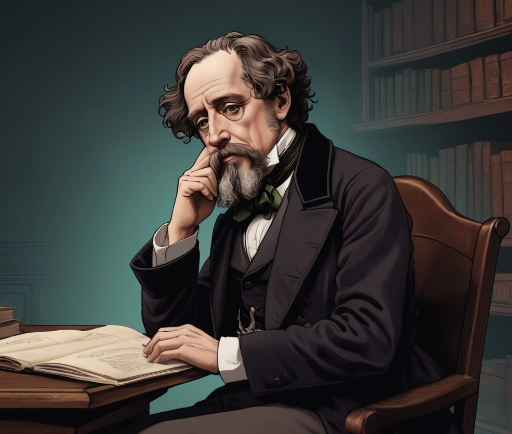
Charles Dickens is renowned for his vivid depiction of Victorian society, particularly in relation to crime and punishment. His stories reflect the complexities of morality, justice, and the societal conditions that lead to criminal behavior.
In this blog post, we will explore how Dickens portrays crime and the mechanisms of punishment across his works, highlighting themes, characterizations, and the social commentary embedded in his narratives.
1. The Reflection of Society
In many of Dickens’s novels, crime serves as a mirror to societal issues of the time. His characters often find themselves trapped in a system that is inherently flawed, showcasing how poverty and social injustice can lead individuals to commit crimes. For instance, in “Oliver Twist,” young Oliver is driven by desperation and a lack of resources, demonstrating how the relentless grasp of poverty can lead individuals to crime.
Moreover, Dickens portrays the judicial system as frequently ineffective or corrupt. The character of Fagin, for instance, while a criminal, is also a product of a society that marginalizes and ostracizes him. This reveals Dickens’s critique of a system that punishes rather than rehabilitates, highlighting the need for reform and understanding.
-
- Examine character backgrounds to understand motivations.
-
- Consider the societal factors influencing crime in Dickens’s works.
-
- Identify how the setting contributes to character actions.
-
- Reflect on Dickens’s own views toward social justice.
2. The Complexity of Punishment
Dickens’s stories illustrate the multifaceted nature of punishment, showing that it often extends beyond mere incarceration. In “A Tale of Two Cities,” for example, Sydney Carton faces his own form of punishment in the guise of a wasted life, burdened by regret and unfulfilled potential. His ultimate sacrifice acts as both a punishment and a form of redemption, showcasing Dickens’s belief in the possibility of grace.
Additions to this theme show physical punishment, such as the workhouses in “Oliver Twist,” where harsh conditions serve as both deterrents and traps for the poor. Characters in these environments endure not only physical deprivation but also emotional and psychological suffering, underlining Dickens’s stance against punitive measures that lack empathy and humanity.
-
- Analyze the difference between legal punishment and moral repercussions.
-
- Explore redemption arcs present in various characters.
-
- Discuss the emotional impacts of punishment on characters.
-
- Reflect on how Dickens’s portrayal compares to modern views on justice.
3. Crime and Social Class
The intersection of crime and social class is a recurring theme in Dickens’s works. The author often illustrates how the upper and lower classes navigate crime differently. For instance, while the poor are depicted as desperate and driven to criminal acts by circumstance, the wealthy are often shown exploiting the system for personal gain, as seen in “Bleak House.” Characters like Mr. Jarndyce showcase a moral ambiguity that complicates the narrative of right and wrong.
Dickens’s portrayal of characters such as Uriah Heep, who uses subterfuge to climb social ranks, underscores the idea that crime is not limited to those who are impoverished. The hypocrisy of society allows the upper classes to escape moral culpability, provoking readers to consider the broader implications of wealth and crime.
-
- Assess character motivations based on their social class.
-
- Discuss how Dickens challenges stereotypes about crime.
-
- Examine the implications of wealth on the judicial process.
-
- Identify instances of hypocrisy among different social classes.
4. Redemption and Second Chances
Despite the grim realities of crime and punishment in Dickens’s world, there is a persistent theme of redemption. Characters like Ebenezer Scrooge in “A Christmas Carol” exemplify the possibility of transformation, suggesting that people can change their ways and contribute positively to society. Dickens champions the notion that even those who commit crimes deserve a shot at reform.
This hopeful perspective fosters a sense of compassion in readers, urging them to consider the complexities of human behavior and the societal structures that influence it. By exhibiting acts of kindness and generosity, Dickens illustrates that redemption is attainable and celebrates the resilience of the human spirit.
-
- Consider the role of compassion in responding to crime.
-
- Evaluate how characters’ journeys highlight personal growth.
-
- Reflect on Dickens’s messages about forgiveness and second chances.
-
- Promote discussions around rehabilitation versus punishment.
In conclusion, Charles Dickens uses crime and punishment in his stories as a vehicle to critique societal norms and encourage empathy. His works urge readers to reflect on the complexities of morality, making them relevant even in contemporary discussions surrounding justice. As you explore the depths of Dickens’s narratives, consider how these themes resonate today and what role empathy and understanding can play in addressing issues of crime and punishment.