
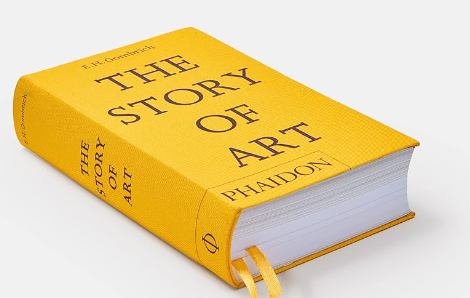
The Story of Art is widely regarded as an essential introduction to art history, but for readers interested specifically in sculpture and three-dimensional art, a focused reading approach can significantly enhance its value. Rather than reading the book strictly from cover to cover, sculptors and 3D artists benefit most by tracking how form, material, and spatial thinking evolve across periods.
Understanding Sculpture as a Historical Language
One of the book’s strengths is its treatment of sculpture not as isolated objects, but as cultural responses to belief systems, technology, and social change. Early chapters on prehistoric and ancient civilizations reveal how sculpture originally served ritual, religious, and political functions. Stone idols, relief carvings, and monumental statues demonstrate how early artists understood mass, symmetry, and symbolism long before modern theory existed.
Key Periods for Three-Dimensional Thinking
Readers focused on sculpture should pay special attention to sections on Classical Greece, the Renaissance, and the Baroque period. These chapters explain how artists developed anatomical accuracy, proportion, and movement. Sculpture is presented as a problem of balance and realism, showing how artists solved challenges related to weight distribution, contrapposto, and expressive gesture. These insights remain highly relevant for contemporary sculptors working in any medium.
Materials and Techniques Across Time
Throughout the book, materials play a central role in shaping artistic outcomes. Marble, bronze, wood, and clay are discussed not only as substances but as constraints that influence form. Understanding why certain cultures favored specific materials helps modern readers think more critically about durability, surface treatment, and scale in three-dimensional work.
Reading with a Sculptor’s Eye
To get the most from the book, sculptors should pause frequently to analyze images rather than rushing through text. Study silhouettes, negative space, and how figures interact with their surroundings. Sketching forms while reading can also reinforce spatial understanding and deepen engagement with the material.
Applying Historical Knowledge to Modern Practice
This reading guide encourages sculptors to treat The Story of Art as a reference rather than a linear narrative. By focusing on form, material, and spatial intent, readers can transform historical knowledge into practical inspiration for contemporary 3D art.