
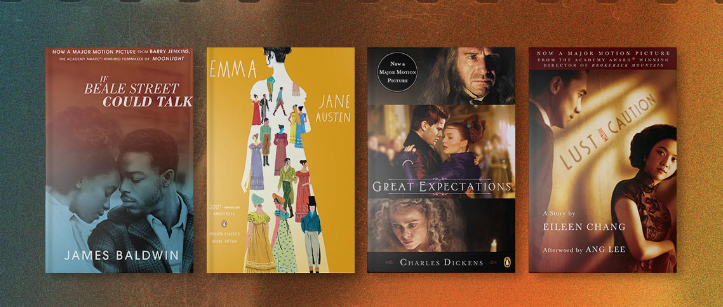
Books have a magical ability to transport us to different worlds, and when these stories are brought to life on the big screen, they can captivate audiences in new and exciting ways. Classic literature has provided a rich source for filmmakers, leading to many adaptations that not only honor the original texts but also introduce timeless tales to new generations.
1. “Pride and Prejudice” by Jane Austen
First published in 1813, Jane Austen’s “Pride and Prejudice” has seen numerous adaptations, with the 2005 film featuring Keira Knightley and Matthew Macfadyen garnering significant attention. This film manages to capture the wit and romantic tension of the novel, depicting the complex social dynamics of early 19th-century England. Similarly, the 1995 BBC miniseries, with Colin Firth as Mr. Darcy, has become iconic, often hailed as one of the best adaptations.
Both adaptations highlight key themes such as class, marriage, and the pressure of societal expectations. The portrayals provide insight into the characters’ motivations and relationships, making Austen’s characters relatable even today. The combination of beautiful cinematography and strong performances ensures that these adaptations are not just visually pleasing but also faithful interpretations of Austen’s prose.
-
- Read the book to appreciate its themes and nuances.
-
- Watch multiple adaptations for varied interpretations of characters.
-
- Pay attention to costume and set designs as reflections of the period.
-
- Discuss character development with friends or a book club.
2. “The Great Gatsby” by F. Scott Fitzgerald
F. Scott Fitzgerald’s “The Great Gatsby” has made its mark in both literature and cinema since its publication in 1925. The 2013 film directed by Baz Luhrmann starring Leonardo DiCaprio offers a modern twist to this classic story of excess and tragedy, complete with vibrant visuals and a contemporary score. This adaptation emphasizes the opulence of the Jazz Age and the illusions of the American Dream.
Critics have noted how Luhrmann’s stylistic choices create a dazzling yet superficial portrayal of 1920s America. The film presents a visually compelling interpretation of themes such as love, loss, and the moral decay behind glittering facades. Interestingly, earlier adaptations, such as the 1974 version featuring Robert Redford, focused more on character depth rather than visual spectacle, showcasing the story through a different lens.
-
- Explore different film adaptations to analyze thematic focus.
-
- Consider the impact of modern-day interpretations on classic stories.
-
- Engage in discussions about the American Dream in contemporary society.
-
- Look at how music influences the mood of the adaptations.
3. “To Kill a Mockingbird” by Harper Lee
Published in 1960, Harper Lee’s “To Kill a Mockingbird” remains a staple in American literature, especially for its poignant exploration of racial injustice. The film adaptation, released in 1962 and starring Gregory Peck, is often celebrated for its powerful performances and emotional weight. The film stays remarkably true to the book, allowing the themes of morality and compassion to resonate profoundly with the audience.
The character of Atticus Finch, played by Peck, has become a symbol of integrity and justice, often inspiring discussions about moral education and ethical leadership. The film effectively translates the book’s sometimes subtle social commentary into a powerful visual narrative, emphasizing the importance of empathy and understanding in addressing societal issues. Many viewers find themselves reflecting on the themes long after the credits have rolled.
-
- Read reviews of both the book and the film for insights.
-
- Discuss the evolution of Atticus Finch as a character.
-
- Consider historical context when studying themes of justice.
-
- Engage with community events that reflect the book’s themes.
4. “The Catcher in the Rye” by J.D. Salinger
While J.D. Salinger’s “The Catcher in the Rye” has not been adapted into a feature film, its impact on literature and culture has led to ongoing discussions about what a film could capture. Many fans believe translating Holden Caulfield’s inner monologue and societal critique would be uniquely challenging. The book’s themes of alienation, identity, and teenage angst resonate widely, making many wonder how they could be depicted visually.
This absence of a film adaptation allows readers and critics to continuously engage with the text in fresh ways, pondering how certain scenes or characters might be rendered on screen. Various short films and projects inspired by the book have emerged online, demonstrating the artistic efforts to bridge literature and cinema, albeit unofficially. A potential film adaptation could explore the complex psyche of Holden while addressing the cultural shifts since the book’s publication.
-
- Engage in discussions about why adaptations can be challenging.
-
- Consider the impact of Holden’s character on modern storytelling.
-
- Explore fan interpretations through artistic mediums.
-
- Reflect on techniques that capture internal dialogue visually.
5. “Moby Dick” by Herman Melville
Herman Melville’s “Moby Dick” has proved to be a challenging but rewarding classic to adapt into film. The 1956 version featuring Gregory Peck brought the infamous tale of Captain Ahab’s obsession to life, showcasing Melville’s exploration of vengeance and man’s struggle against nature. This adaptation, while not perfect, offered a grand portrayal of the conflict between humanity and the natural world.
More recent adaptations have attempted to capture the complexity of the narrative, including the 2010 miniseries that took a more modern approach. Understanding the symbolism of the white whale and the themes of obsession and fatalism can enhance viewers’ appreciation of the film adaptations. Melville’s rich prose, combined with visually compelling storytelling, makes “Moby Dick” a fascinating narrative choice for filmmakers.
-
- Read critical essays on the themes of “Moby Dick” to deepen understanding.
-
- Watch multiple adaptations for a comprehensive view.
-
- Discuss character motivations and thematic relevance.
-
- Explore how different films render symbolism visually.
Classic literature films offer a rich avenue for exploring timeless themes and connecting with stories that resonate across generations. As you delve into these adaptations, consider how each interpretation brings unique insights to the original material. Take some time to engage with both the books and their films to fully appreciate their lasting impact.