
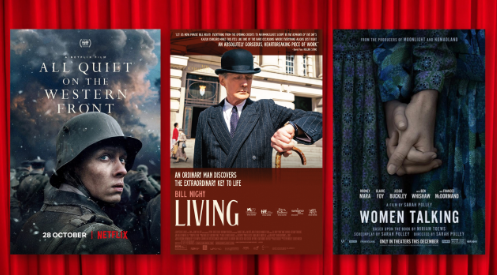
Books have the incredible ability to transport us to different worlds, evoke emotions, and inspire thoughts. When these literary treasures transition to the big screen, they often bring along their unique narratives and character arcs, enriching cinema with stories that have captivated readers for generations. In this blog post, we’ll explore several books that have not only made their mark in literature but have also transformed into award-winning screenplays.
1. The Godfather
Adapted from Mario Puzo’s bestselling novel, “The Godfather” was brought to life in 1972 by director Francis Ford Coppola. The story, centered around the powerful Corleone Mafia family, intertwines themes of loyalty, power, and familial ties. Winning multiple Academy Awards, including Best Picture, the film has become a cultural phenomenon, often hailed as one of the greatest films in history.
The screenplay’s meticulous adaptation from the book retained the book’s rich character development while intensifying the dramatic conflicts. Memorable quotes and iconic scenes from the novel transitioned seamlessly into film, cementing the screenplay’s status in cinematic history. The film’s artistic choices, such as its score and cinematography, enhance the storytelling, providing a visual richness that elevates the narrative.
-
- Re-read the original book: Understand its themes and characters.
-
- Study the screenplay: Identify how pivotal scenes were adapted.
-
- Watch behind-the-scenes documentaries: Gain insights into the adaptation process.
-
- Discuss with friends: Share perspectives on the differences between the book and the film.
2. To Kill a Mockingbird
Harper Lee’s powerful novel, “To Kill a Mockingbird,” was adapted into an acclaimed film in 1962, directed by Robert Mulligan. The story, narrated through the innocent eyes of Scout Finch, addresses deep issues of racial injustice and moral growth, deeply resonating with audiences both in print and on screen. The film won three Academy Awards, including Best Actor for Gregory Peck, who portrayed the principled lawyer Atticus Finch.
The screenplay effectively captured the book’s poignant themes while introducing a visual narrative that brought the Southern town’s atmosphere to life. The film’s ability to convey complex moral lessons through simple dialogue made it relatable to a broad audience. Additionally, the symbolism, such as the mockingbird representing innocence, was powerfully depicted in various scenes, enriching viewers’ understanding of the book’s core messages.
-
- Explore the historical context: Understand the era in which both the book and film were released.
-
- Analyze character portrayals: Reflect on how actors brought the characters to life.
-
- Compare narrative techniques: Note the differences in storytelling between book and film.
-
- Create discussion groups: Engage with others to explore the themes and their relevance today.
3. The Silence of the Lambs
Thomas Harris’s gripping novel “The Silence of the Lambs,” published in 1988, was adapted into a film that became a benchmark in the psychological thriller genre. Released in 1991 and directed by Jonathan Demme, the film received five Academy Awards, including Best Picture and Best Director. It not only brought Julianne Moore’s character Clarice Starling to life but also introduced audiences to the chilling character of Dr. Hannibal Lecter, played by Anthony Hopkins.
The screenplay masterfully balanced intense psychological horror with character development. While the novel provided a deep dive into the characters’ thoughts, the film achieved a strong impact through visual storytelling and tense dialogues. Elements such as the chilling interactions between Starling and Lecter allowed for a unique suspenseful buildup that kept audiences on the edge of their seats.
-
- Read up on character psychology: Understand the complexities of characters like Hannibal Lecter.
-
- Spot the differences: Note how tension is built differently in the novel and film.
-
- Watch the film with commentary: Gain insights from the director and writers.
-
- Join film analysis forums: Discuss with others to gain diverse perspectives.
4. The Lord of the Rings
J.R.R. Tolkien’s epic fantasy series, “The Lord of the Rings,” was masterfully adapted into a film trilogy directed by Peter Jackson, with the first film released in 2001. The films were monumental in scale and depth, winning numerous awards, including several Academy Awards for Best Picture, Art Direction, and Visual Effects. This adaptation is often noted for its faithful representation of Tolkien’s intricate world and characters.
The screenplay retained the essence of Tolkien’s narrative while making necessary adjustments for pacing and coherence in a cinematic format. The use of visual effects brought the stunning landscapes of Middle-earth to life, providing a visual feast that complements the themes of friendship, sacrifice, and the battle between good and evil. The depth of the characters was maintained while exploring new dimensions through the actors’ performances.
-
- Engage with the companion texts: Read Tolkien’s appendices and related notes.
-
- Attend film festivals: Watch discussions about the adaptation process.
-
- Draw parallels: Compare the character arcs in both book and film.
-
- Explore fan communities: Share insights and interpretations of the story’s themes.
5. The Fault in Our Stars
John Green’s poignant novel, “The Fault in Our Stars,” was transformed into a heartwarming film in 2014, directed by Josh Boone. The story focuses on two teenagers navigating love and cancer, blending humor and sadness in a way that resonates with a wide audience. The film gained critical acclaim and even earned nominations at several award shows, particularly for its heartfelt performances by Shailene Woodley and Ansel Elgort.
The screenplay captured the novel’s spirit by maintaining its emotional honesty and witty dialogue. Though some plot points were streamlined for the film format, the essential themes of love, life, and loss remained intact. The film utilized unique cinematographic techniques to highlight the characters’ inner worlds, allowing viewers to connect deeply with their experiences and struggles.
-
- Reflect on emotional themes: Explore how they are represented differently in film and book.
-
- Watch interviews with the cast: Gain insights into their character interpretations.
-
- Organize viewing parties: Discuss emotional responses with friends after watching.
-
- Write a comparative essay: Focus on themes or character development in both mediums.
In conclusion, these adaptations demonstrate how books can thrive in the realm of film, each telling a unique story that appeals to both readers and viewers alike. Whether you’re a fan of classic literature, thrilling narratives, or heartfelt dramas, these award-winning screenplays are a testament to the timelessness and adaptability of great stories. So, grab a book, watch the film, and immerse yourself in the rich worlds these narratives offer.