
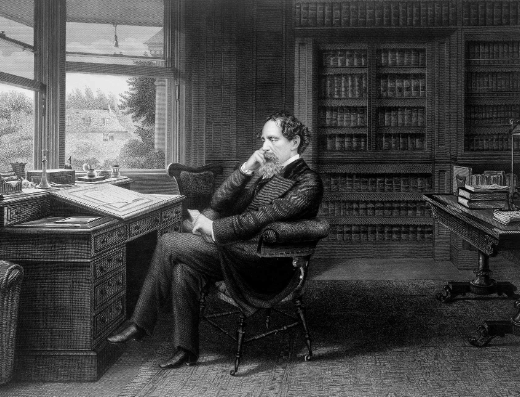
Charles Dickens remains one of the most celebrated authors in English literature, renowned for his vivid characters and intricate narratives. His writing evolved significantly throughout his career, reflecting his personal growth, societal observations, and the changing literary landscape of his time.
1. The Early Works: Sketches and Short Novels
In the early stages of his writing career, Dickens produced a series of sketches that captured the everyday lives of Londoners and the rapidly changing urban landscape. His first major work, “The Pickwick Papers,” published in 1836, showcased his talent for humor and satire. This period was characterized by a whimsical style, where the focus was on entertainment rather than deep social commentary.
As Dickens honed his craft, he started to weave more complex narratives and characters into his sketches. In “Oliver Twist,” for instance, he addressed pressing social issues like poverty and child exploitation, albeit through a somewhat melodramatic lens. The tales of young Oliver and his struggles within a corrupt society revealed Dickens’s sensitivity to social injustices, laying the groundwork for his later, more serious works.
-
- Explore various themes in early works like humor and social criticism.
-
- Identify the evolution of characters from comical to serious.
-
- Analyze the settings to understand the urbanization of Victorian society.
-
- Read “Oliver Twist” for a glimpse into Dickens’s early social consciousness.
2. The Middle Period: Complex Characters and Realism
Transitioning into the middle of his career, Dickens’s writing became more nuanced and intricate. He introduced a plethora of complex characters who embodied the social issues of the Victorian era. Works such as “David Copperfield” and “Bleak House” delve into themes of injustice, legal corruption, and class disparity, showcasing his growing commitment to social reform through literature.
During this time, Dickens also embraced a more realistic narrative style. His characters were not merely archetypes; they were flawed, multi-dimensional figures facing genuine challenges. For instance, David’s journey from childhood to adulthood captures the essence of personal development intertwined with the harsh realities of society. This era solidified Dickens’s reputation as a novelist who not only entertained but also provoked critical thought about societal issues.
-
- Study character development in “David Copperfield.”
-
- Explore themes of justice and morality in “Bleak House.”
-
- Consider the societal impact of Dickens’s portrayal of class struggles.
-
- Examine his use of realism in contrast to earlier romanticism.
3. The Later Works: Social Concerns and Personal Reflection
As Dickens approached the later stages of his writing career, his style shifted again, incorporating more personal and introspective elements. This evolution is prominently displayed in works like “Great Expectations” and “A Tale of Two Cities.” The themes of redemption, personal failure, and societal upheaval illustrate Dickens’s maturing perspective on life and morality.
The narrators in these later works often reflect Dickens himself, grappling with complex emotions and societal expectations. In “A Tale of Two Cities,” the backdrop of the French Revolution serves as a powerful metaphor for change and the human cost of conflict. The tone becomes more somber, indicating a shift towards a deeper exploration of human nature and resilience amidst adversity.
-
- Reflect on personal themes in “Great Expectations.”
-
- Analyze historical context in “A Tale of Two Cities.”
-
- Investigate the impact of personal experiences on Dickens’s later themes.
-
- Consider the use of symbolism and foreshadowing in these works.
4. The Impact of Personal Life on Writing Evolution
Throughout his writing career, Dickens’s personal life significantly influenced his literary output. His troubled childhood, including the hardships he faced after his father’s imprisonment, shaped his empathetic portrayal of characters like Oliver Twist and David Copperfield. These autobiographical elements provided depth and nuance to his narratives, allowing readers to connect on an emotional level.
Moreover, Dickens’s relationships with women, including his complicated marriage and later friendships, informed his understanding of gender dynamics in society. This is evident in the strong female characters in his later works, who often challenge societal norms. By delving into his personal life, one can better appreciate how his experiences enriched the themes of his narratives.
-
- Examine autobiographical elements in Dickens’s characters.
-
- Study his relationships to understand female representations in his works.
-
- Consider how hardships influenced the themes of resilience and redemption.
-
- Map Dickens’s personal experiences to his literary achievements.
In conclusion, Charles Dickens’s writing evolved remarkably throughout his career, moving from whimsical sketches to profound social commentaries. Each phase of his literary journey reflects his personal growth and changing perspectives on society. For those interested in literature, exploring Dickens’s work offers valuable insights into human nature and the fabric of Victorian society.