
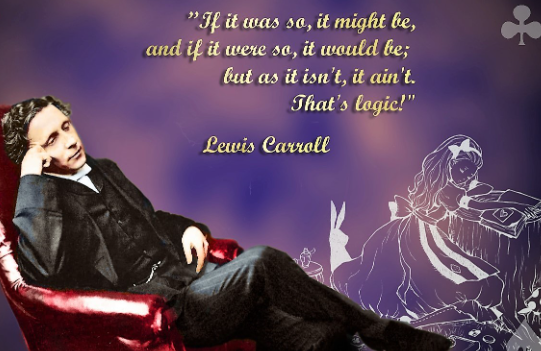
Lewis Carroll’s Wonderland is a captivating realm where logic is playful and absurdity reigns. Understanding the logic embedded in this fantasy not only enhances our appreciation of Carroll’s work but also offers insights into the nature of reasoning and language itself. Through whimsical characters and surreal situations, Carroll challenges conventional thought, making his writings relevant for both literary enthusiasts and those interested in philosophy.
Logic and Nonsense: The Duality of Wonderland
In “Alice’s Adventures in Wonderland,” Carroll introduces readers to a world where the normal rules of logic often don’t apply. The characters, like the Cheshire Cat and the Mad Hatter, engage in conversations that seem nonsensical at first glance yet reveal underlying truths about reasoning and perception. This duality forces readers to reconsider their assumptions about language and meaning, highlighting how context alters understanding. By blurring the lines between sense and nonsense, Carroll invites deeper contemplation of how we derive meaning from the chaotic world around us.
Mathematics and Riddles: A Playful Exploration
Carroll, a mathematician himself, embeds mathematical principles and riddles throughout his stories. For instance, the logical puzzles posed by characters encompass ideas from set theory and combinatorial logic. This playful exploration of mathematics not only entertains but also serves as a device to engage young minds with complex concepts. By threading these elements into his narrative, Carroll transforms learning into a delightful challenge, encouraging readers to embrace curiosity and critical thinking.
Cherry-Picked Logic: A Tool for Discussion
The conversations in Wonderland often showcase cherry-picked logic, where characters selectively use reasoning to justify absurd conclusions. For example, the Queen’s arbitrary declarations illustrate how authoritative figures can distort logic to serve their interests. This aspect of the narrative promotes discussions about the validity of arguments in real life, encouraging readers to question authority and reason critically. By mirroring the often selective nature of arguments in society, Carroll’s Wonderland acts as a mirror reflecting our own world’s inconsistencies.
In conclusion, Lewis Carroll’s Wonderland is more than just a whimsical tale; it’s a profound exploration of logic, language, and reasoning. Delving into these themes can enrich our understanding of both literature and the logical structures that underpin our everyday lives. Explore more about this fascinating world and expand your perspective on how fantastical narratives can illuminate serious themes in logic and philosophy.